
Schengen Visa Appointment UK: Availability, Visa Centres & How the System Works
Booking a Schengen visa appointment in the UK often turns out to be more stressful than planning the actual trip. Applicants spend weeks checking websites, refreshing pages, and comparing stories in forums, only to find that slots appear briefly and disappear just as quickly. The confusion is amplified by different rules, multiple visa centres, and limited official guidance that rarely explains how the system truly operates.
This article is designed as a pillar overview for anyone trying to understand the United Kingdom Schengen appointment landscape. Instead of focusing on one country or workaround, it looks at how the system is structured, why appointments are often unavailable, and what real, practical options applicants still have to secure a slot and actually get into a visa application center.
How the Schengen visa system works in the United Kingdom
The UK does not issue Schengen visas directly. Each Schengen country remains responsible for its own visa section, decision-making, and approval rules, even though applications are formally submitted through external service providers.
Many people see the schengen visa application as a single administrative step, but in reality it is a layered process. Commercial visa centres manage bookings and document collection, while embassies review files, assess risk, and make final decisions. Knowing this separation helps applicants understand why delays happen and why centre staff cannot accelerate outcomes.
In most cases, the visa granted is for short stay travel, allowing temporary entry to the Schengen area for tourism, family visits, or business purposes.
Visa application centre and embassy: how responsibilities are divided
A visa application centre focuses on logistics. It collects your passport, checks that forms are completed, gathers biometric data, and handles the service fee along with any other required payments. It does not evaluate eligibility or influence whether a visa will be approved.
That role remains exclusively with the embassy or consulate of the destination country. This is why repeated attempts to contact the centre about processing decisions rarely lead to meaningful answers. Even when the term visa application center is used instead, the function remains exactly the same.
Where applicants submit their documents in the UK
Across the nation, most providers operate three visa application centres, located in London, Manchester, and Edinburgh. Each centre serves a specific geographical area linked to your registered address and your place of residence in Britain.
Applicants must book an appointment at the correct location. Choosing the wrong city may result in rejection at check-in or forced cancellation, even if the appointment was successfully booked online.
Schengen visa appointment UK: why availability is limited
The lack of availability is rarely accidental. Embassy staffing limits, seasonal travel peaks, and fixed quotas all affect how many appointments can be released at any time. Because slots are often uploaded in batches, applicants checking for a schengen visa appointment uk may see no openings for weeks, followed by a brief release that fills within minutes. This behaviour makes the system feel unpredictable, even though it is operating within strict limits.
A simple way to understand this is to look at the limits each consulate works with. Every mission has only so many officers who can review applications, which means there is a very real ceiling on how many cases they can handle in a month. If, for example, a consulate can handle around a hundred applications, the visa application centre will open roughly the same number of appointment slots. No matter how many people want to apply, the system cannot suddenly produce fifty extra appointments unless the consulate itself increases its capacity. Most of the time, the number of available slots simply reflects the workload the consular team is actually able to assess.
And because the number of people trying to apply is almost always much higher than the number of cases the consulate can realistically review, we keep seeing the same pattern repeat: demand overwhelms supply. As soon as a batch of appointments appears, hundreds of applicants rush to secure them, and the slots disappear within minutes — not because the system is broken, but because there are far more people waiting than the consulate can handle at once.
If you’re struggling with appointment booking, Visabot can alert you when new slots appear and even secure the booking automatically.
Appointment online systems and common technical issues
For most people, the first step is using the appointment online system on the official website. In practical terms, this means setting up an account, typing in your passport number, picking a suitable date, and then paying for the booking.
These platforms are under heavy load, especially during peak seasons. Timeouts, blank pages, or sudden error messages are common and affect every person, regardless of experience or preparation.
Types of visa applications: short stay, family, and business
A single visa application structure covers multiple travel purposes. Applicants may apply for tourism, a business trip, or travel as a family member, but the booking process itself remains identical.
The declared purpose determines which documents and which type of proof are required. Special rules also apply to holders of an official passport, whose applications are often handled through different channels.
What applicants should prepare before submitting
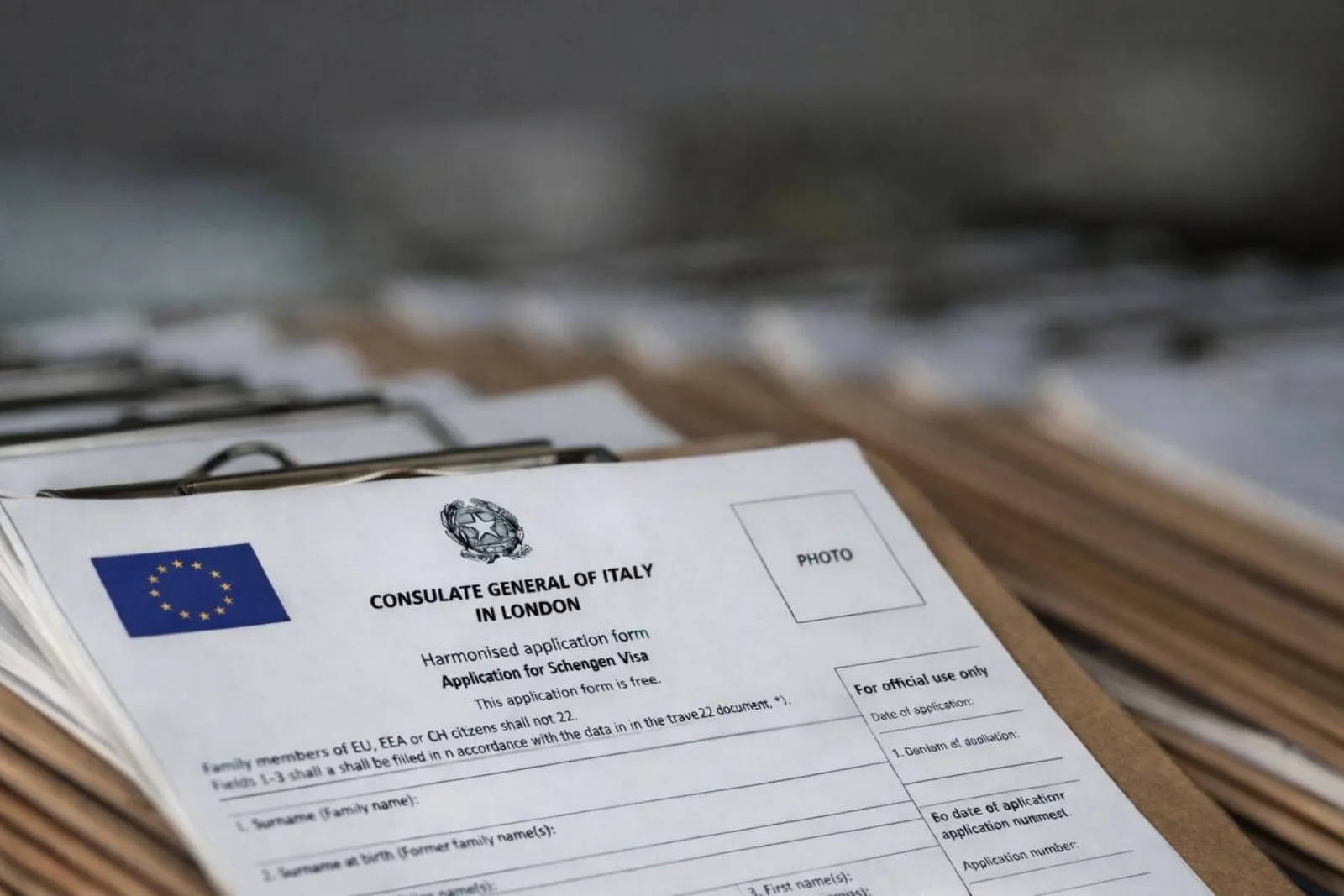
Before you apply, preparation is essential. A valid passport, a completed application, and properly organised supporting documents should already be ready before you attempt to schedule an appointment.
A surprisingly common issue is incomplete paperwork, which can mean that an appointment goes unused or is cancelled once the problem is spotted at the submission stage.
Visa fees, service fee, and payment rules explained
Applicants usually pay both official visa fees and a separate service fee charged by the centre. These are distinct costs, and the service fee applies regardless of the outcome.
Optional additional services, such as document checks or priority handling, increase the total payment but do not influence whether a visa is approved or accepted. Most centres accept card payment, including debit, while cash is rarely allowed.
Additional services: what they offer in practice
An additional service might cover things like SMS updates, document scanning, or more flexible passport collection. For some applicants, these options are simply a matter of convenience, especially if they want fewer follow-ups and a bit more predictability in the procedure.
At the same time, it helps to understand that these extra services are purely practical. They are simply there to make the practical side run a bit more smoothly and have no bearing on how the consular authority looks at your case.
Booking methods: from manual booking to assisted tools
Applicants generally rely on one of three approaches: manual appointment booking, agency assistance, or monitoring tools that notify users when slots appear.
Manual booking requires patience and frequent system access, while agencies may help structure the file but cannot bypass embassy controls.
Cancellations, rescheduling, and missed appointments
If an appointment is missed, some systems restrict future bookings temporarily. Limited cancellation options may be available, but not all platforms permit rescheduling without penalty.
Ignoring platform warnings or official note sections often leads to avoidable delays.
What happens at the visa application centre on the day
On the day itself, applicants arrive in person to submit their file. Staff check documentation, capture biometrics, and confirm the schedule before forwarding materials to the embassy.
From an applicant’s perspective, the schengen visa application formally begins only once biometrics are taken and documents have been accepted into the system. Everything before that step is preparatory.
After submission: processing and collection
Processing times vary by country and workload. Most applicants receive limited updates and are notified only when the passport is ready to collect or if further documents are requested.
Who must apply and who does not
British citizens do not need a visa for short stays in the Schengen area.
However, residents of Britain who hold passports from other nations must complete the full application and booking process, regardless of how long they have lived in the United Kingdom. These applicants follow the same rules as any first-time traveller, since Schengen eligibility is determined by nationality rather than local residency status. This applies equally to temporary residents, long-term visa holders, and individuals with permanent residence.
Country-specific differences to keep in mind
Some countries, including Switzerland, use different partners or impose additional procedural steps. For example, Norway requires applicants to complete the online application form on a separate government portal before an appointment can even be booked, and some other countries may request additional identity verification to ensure that the person scheduling the appointment is the same individual who will submit the application. Because these rules vary by destination, checking embassy guidance early helps avoid mistakes.
Common mistakes applicants make
People often run into simple issues, like booking the wrong centre or overlooking mandatory visa requirements. Others arrive with incomplete paperwork or outdated contact details, which the system relies on to keep applicants informed. Another mistake is cancelling an appointment before the visa is issued or turning up without enough financial proof, both of which can lead to delays or even a refusal. Taking a moment to double-check the essentials usually helps avoid these problems.
FAQ: Schengen visa appointment and application basics
How early should I book an appointment?
As soon as your travel plan becomes valid — ideally several months in advance. Appointment openings are limited, and many centres release slots unpredictably, so early action gives you the best chance of securing a suitable date.
Can I apply for your visa in any city?
No. You must apply in the visa application centre that corresponds to your registered address, whether that is London, Manchester, or Edinburgh. Booking in the wrong location may lead to cancellation at check-in.
Can appointments be transferred?
No. Appointments cannot be transferred or reassigned to another person. All details — including your name, passport number, and contact information — must match exactly, otherwise the booking will not be accepted.
Final note
The Schengen appointment system in the United Kingdom can seem confusing at first, but it becomes much clearer once you understand how everything fits together. People who prepare a little earlier — check the official website now and then, get their documents in order, and keep in mind that busy periods really do affect the process — usually feel far more in control. When you understand how appointments, service providers, and embassies work alongside each other, it’s easier to stay organised and aware of what’s coming next. With a bit of planning and a realistic approach, booking an appointment turns into something you can genuinely manage, rather than a source of constant stress.